
Lent
By Fr. Gavin Dunbar

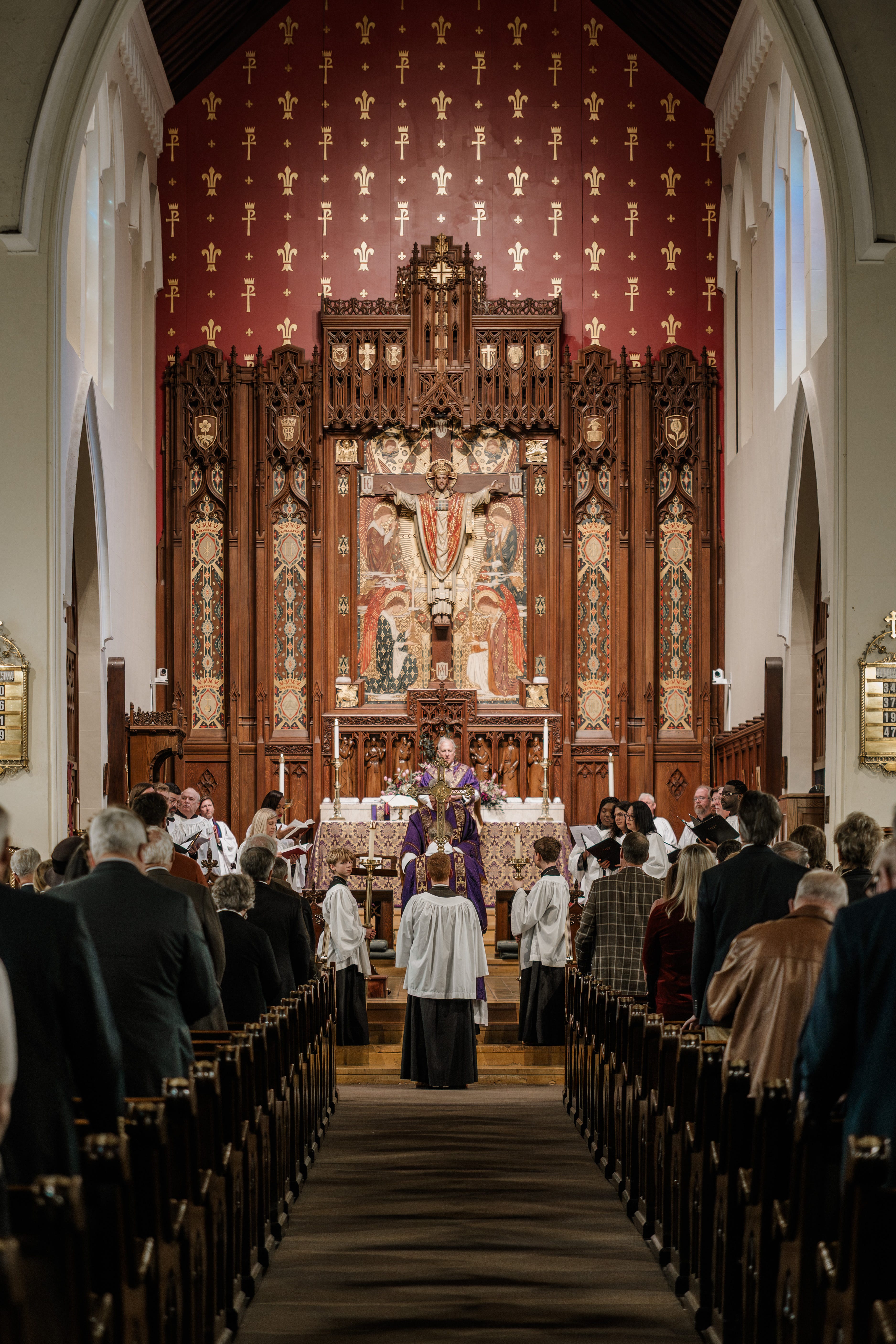
Lent
In an age that wants to be “spiritual, not religious”, the secular Lent is all around us. “De-toxing” and “cleansing” diets are commonplace; exotic forms of meditation are (once again) all the rage among celebrities and high-rollers; sober experts in health-care and personal wellness eagerly share the science behind gratitude. Ancient spiritual practices are being harnessed for happy living in a stressful world. The religious element, of course, is optional – or not: perhaps following Jesus is the way to wellness, prosperity, and self-realization.
Or is it? At the beginning of Lent, we read St. Matthew’s account (4:1-11) of Jesus’ supernaturally-extended fast of “forty days and forty nights” and his subsequent temptation, or testing, in the wilderness. It’s one of the most deeply layered passages in the gospels, with matter enough for a small book packed into its dozen verses. There are intricate allusions here to Israel’s long history, its own trials in the wilderness, and behind that, to the probation of Adam in the garden. The central idea, however, is plain enough. Though all mankind (in Adam), and all Israel has been called to divine Sonship, Jesus alone proves himself worthy of it. All others, called to sonship, sought to make themselves “as gods” (Genesis 3:5), in hubris grasping after, and falling short of, the glory of God. In contrast, though “being in the form of God”, Jesus “made himself of no reputation, and took upon him the form of a servant, and was made in the likeness of men”. In contrast to their proud aspiration after great things, he “humbled himself, and became obedient unto death, even the death of the cross” (Philippians 2:6-8).
That is to say, he does not seek self-realization through the judicious application of techniques, but to be the instrument of the Father’s will and work by fidelity to the Father’s word. Enough for him to accept what the Father wills for him – hunger, thirst, the baptism of sorrow, and the bitter cup that awaits him at the cross. The rest is in the Father’s hands, and it is of course nothing less than resurrection, exaltation, seated at the right hand of the Father, shame turned to glory. “Wherefore God also hath highly exalted him…”
Jesus isn’t offering us techniques for self-realization. Instead, he is establishing a template for giving up the project of self-realization, and instead entrusting “our selves, our souls, and bodies” to God, who in Christ will bring to fulfilment in us all that he has designed for us. It is in this perspective that we may understand Jesus’ own teaching about “self-realization”: “whosoever would save his life shall lose it; but whosoever shall lose his life for my sake and the gospel’s, the same shall save it” (Mark 8:35). The more we try to realize ourselves – to treat the self as absolute, to make ourselves as gods – the less we succeed; the more we hand over ourselves to Christ, the more we find ourselves in him. We don’t have to be ‘successful’ – we just have to belong to him, to acknowledge ourselves as his. He will do the rest.
And that is the meaning of the spiritual disciplines of Lent. It’s not about self-realization, secular or religious. It’s not about “self-improvement”, spiritual or material. It is about belonging to him, and living in him, in repentance, faith, and love. Fasting and abstinence teach us that we are not ruled by our wants. Prayer teaches us to want what God wants. Almsgiving teaches us to love as God loves. Together, they are means of dying to self, that we may live in Christ, as serviceable instruments of his will. As this Sunday’s collect puts it, we ask Christ for grace “to use such abstinence, that, our flesh being subdued to the Spirit, we may ever obey thy godly motions in righteousness, and true holiness, to thy honour and glory”.
GGD